
How Does a Smokeless Fire Pit Work? Understanding Secondary Combustion

A fire pit brings warmth, atmosphere and a natural gathering point to an outdoor space. But anyone who has spent an evening moving their chair to avoid a stream of smoke knows that an open fire can also come with a less comfortable side.
Smokeless fire pits are designed to reduce that problem. They still burn real fuel and still produce combustion gases, but their construction encourages a more complete burn that can significantly reduce visible smoke once the fire is burning effectively.
The key is a process known as secondary combustion. So, how does it work, and what makes a smokeless fire pit different from a conventional open fire pit?
Why Does a Fire Produce Smoke?
When wood burns, heat breaks the fuel down and releases gases and fine particles. If these combustible gases and particles do not burn completely, some leave the fire as visible smoke.
How cleanly a fire burns depends on several factors, including airflow, fuel quality, moisture content and temperature. A fire that is struggling for oxygen, or burning damp wood, is more likely to produce noticeable smoke.
A smokeless fire pit cannot remove every variable, but its design helps create the conditions for a hotter, more efficient burn by managing how air reaches the fire.
What Is Secondary Combustion?
Secondary combustion is the additional burning of combustible gases and particles that were not fully burned during the first stage of the fire.
In a conventional open fire, some of these gases can escape before they ignite. A smokeless fire pit is designed to introduce heated oxygen higher in the fire chamber. When the fire is hot enough, this additional air helps ignite more of the gases above the main flames.
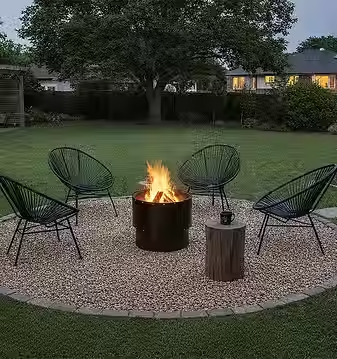
The result is the characteristic secondary flame pattern often visible around the upper inside edge of a smokeless fire pit. By burning more of what would otherwise leave the fire as smoke, the system can create a cleaner and more comfortable outdoor fire experience.
How Does a Double-Wall Fire Pit Create the Effect?
The double-wall construction is central to how many smokeless fire pits work.
Air is drawn into the fire pit through openings near the base. Some of that oxygen feeds the primary fire from below, helping the fuel burn. Another portion moves through the space between the inner and outer walls, where it is heated as the fire pit warms up.
That preheated air is then introduced into the upper part of the fire chamber through a second set of openings. When it meets the hot, unburned gases rising from the fire, secondary combustion can take place.
This continuous movement of air is what distinguishes the design from a simple open bowl. The fire pit is not filtering smoke after it has been produced. It is encouraging more complete combustion before those gases leave the fire.
Does “Smokeless” Mean There Is No Smoke?
No. “Smokeless” describes the way the fire pit is designed to reduce smoke, not the complete absence of it.
You may still see smoke while the fire is being lit, when new fuel is added or if the fuel is damp. Secondary combustion also relies on the fire reaching a sufficient operating temperature, so the effect becomes more noticeable once the fire is properly established.
Using dry, suitable fuel and allowing good airflow remain important. The design can improve the burn, but the way the fire is built and maintained still affects its performance.
Fuel and Airflow Still Matter
Good combustion begins with the fuel. Dry wood generally burns more readily and produces less smoke than wet or unseasoned wood because less of the fire’s energy is spent driving moisture from the fuel.
Airflow is equally important. The openings around a smokeless fire pit are part of its combustion system and should not be obstructed. Overfilling the fire pit can also interfere with the intended movement of air through the chamber.
The EMBER Smokeless Fire Pit can be used with wood or charcoal, giving it flexibility for outdoor use. Whichever fuel is chosen, following the product guidance and allowing the airflow system to work as designed will help the fire pit perform as intended.
What Are the Benefits of Secondary Combustion?
The most obvious benefit is reduced visible smoke, which can make sitting around the fire more comfortable. Less smoke drifting through an entertainment area means fewer interruptions from changing wind direction and a more enjoyable experience for people gathered nearby.
Secondary combustion also means more of the combustible gases released by the fuel are burned rather than escaping immediately from the fire. This can produce a lively flame pattern and helps the fire make more complete use of the fuel as it burns.
The appeal is therefore not simply technical. The combustion design supports the reason most people want a fire pit in the first place: to create an outdoor space where people can gather comfortably around a real fire.
The EMBER Smokeless Fire Pit
The EMBER Smokeless Fire Pit uses a double-wall design and secondary combustion to create its reduced-smoke burning effect. The range is available in 50cm and 60cm sizes, offering options for different outdoor spaces.
Its portable format makes it suitable for patios, gardens and outdoor entertainment areas where a permanent built-in fireplace may not be required. Optional accessories, including a lid and braai grid, can extend how the fire pit is used.
As with any open fire, placement and safe use matter. The fire pit should be positioned on a suitable surface, with appropriate clearance from combustible materials, and used according to the product instructions.
What Should You Consider When Choosing a Smokeless Fire Pit?
Before choosing a fire pit, consider:
The size of your outdoor area
Where the fire pit will be positioned
Clearance from combustible materials and surrounding objects
Whether you plan to burn wood, charcoal or both
The size of fire pit that suits the space and number of people gathering around it
Whether accessories such as a lid or braai grid would be useful
How the unit will be stored or protected when not in use
A smokeless fire pit works best when its combustion design is supported by sensible placement, suitable fuel and correct use.
Explore EMBER with Eurafrican
Eurafrican has worked with cooking and heating products in South Africa since 1962. The EMBER Smokeless Fire Pit range brings secondary-combustion technology into a portable outdoor fire feature designed for South African entertaining spaces.
Explore the EMBER Smokeless Fire Pit range and find the size and accessories that suit your outdoor space.

Comments