
How to Choose the Right Extractor Hood for Your Kitchen
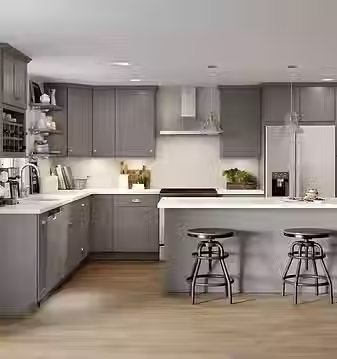
An extractor hood may not be the first appliance you think about when planning a kitchen, but it plays an important role in how comfortable and functional the space feels.
Cooking naturally produces steam, airborne grease and odours. Effective kitchen extraction helps manage these by moving or filtering air while you cook. With modern cooker hoods available in a wide range of configurations and finishes, an extractor can also become an important part of the kitchen's overall design.
From slimline and wall-mounted extractor hoods to island and integrated models, choosing the right option means considering more than appearance alone. So, what should you look for when choosing an extractor hood for your kitchen?
Why Does Kitchen Extraction Matter?
Whether you are frying, simmering or cooking several dishes at once, heat, moisture, grease and odours are released into the kitchen. A well-chosen extractor hood helps remove or filter these from the air close to the cooking surface. This can contribute to a more comfortable cooking environment and help reduce the build-up of airborne grease around the kitchen.
The important point is that not every kitchen has the same extraction requirements. The size and layout of your kitchen, where your hob is positioned and the way you cook can all influence which type of cooker hood is appropriate. That makes kitchen extraction something worth considering early in the kitchen-planning process, rather than treating the extractor as a finishing touch.
What Type of Extractor Hood Suits Your Kitchen?
One of the first decisions is the style and configuration of your extractor.
Slimline Extractor Hoods
A slimline extractor hood can work particularly well where space and visual simplicity are priorities. These units offer a more discreet profile and can suit kitchens where you want effective extraction without making the cooker hood a dominant design feature.
The EUROair Slimline Extractor range offers airflow of up to 350m³/h, with a stated noise level of 55dBA. For contemporary kitchens where space is carefully considered, a slimline cooker hood can provide a practical balance between extraction and understated design.
Wall-Mounted Extractor Hoods
When your hob sits against a wall, a wall-mounted extractor hood is one of the most familiar kitchen extraction configurations. EUROair offers wall-mounted extractors in pyramid, linear and curved-glass designs, with 60cm and 90cm options available.
This variety allows the extractor to become part of the visual language of the kitchen. A linear, stainless-steel model may complement a clean contemporary space, while a curved-glass design creates a different focal point above the cooking surface.
Island Extractor Hoods
If your cooking surface is positioned on a kitchen island, the extraction solution needs to work with that layout. An island extractor hood is suspended above the island, providing extraction directly over the cooking area while remaining visible from several sides of the room. EUROair's island extractor is available in a linear, stainless-steel design, providing a dedicated solution for kitchens where the island is also the main cooking zone.
Integrated Extractor Hoods
Not every kitchen calls for a visible cooker hood. An integrated extractor can provide a more discreet approach, allowing extraction to sit within the surrounding kitchen architecture. Pierre Roblin's integrated extraction range includes ceiling hood solutions that can be incorporated into a ceiling or false ceiling, freeing the space immediately above the hob. This makes integrated extraction particularly relevant to open-plan kitchens, where maintaining clean sightlines is an important part of the design.
How Powerful Should Your Extractor Hood Be?
Extraction capacity matters because a cooker hood needs to be appropriate for the volume of air within the kitchen. Rather than simply assuming that more power is always better, consider the size of the room and how frequently its air needs to be renewed. EUROair's product guidance recommends calculating kitchen volume by multiplying width × depth × height, then considering an extraction capacity capable of approximately 12 air renewals per hour.
For example, a kitchen measuring 3m × 3m × 2.5m has a volume of 22.5m³. At 12 air renewals per hour, that equates to an extraction requirement of approximately 270m³/h. This is a useful starting point, but the kitchen layout, installation and specific cooking requirements should also be considered when selecting an extractor.
Don't Forget About Noise
Extraction performance is important, but so is the experience of using the kitchen. This becomes particularly relevant in open-plan kitchens, where cooking, dining and living spaces often share the same room.
Checking a cooker hood's stated noise level alongside its extraction capacity can help you compare options more meaningfully. EUROair, for example, publishes both airflow and noise specifications across its extractor ranges, allowing these factors to be considered together. A kitchen extractor should support the way the room is used, particularly when the kitchen is also a place to gather, eat and entertain.
Consider Lighting and Everyday Functionality
Practical details can make a noticeable difference to everyday use. Integrated lighting can illuminate the cooking surface below the extractor, while multiple extraction speeds allow you to adjust performance according to what you are cooking.
EUROair wall-mounted models, for example, feature multiple speed settings and dedicated lighting controls. Selected models also include dishwasher-safe aluminium grease filters, helping make routine cleaning more manageable. These may seem like small considerations when comparing cooker hoods, but they are features you are likely to interact with every time you cook.
Think About the Extractor as Part of Your Kitchen Design
Today's extractor hoods don't have to be treated as purely functional appliances. A wall-mounted, stainless-steel cooker hood can become a strong visual feature. An island extractor can help define a central cooking zone. A slimline or integrated extractor can take the opposite approach, keeping the emphasis on cabinetry and other finishes.
EUROair offers different configurations and stainless-steel designs, while Pierre Roblin's integrated solutions provide options where discreet extraction is the priority. The right choice is the one that works with both the practical requirements and design of your kitchen.
Which Extractor Hood Is Right for You?
Before choosing a cooker hood, consider:
The size and volume of your kitchen
The position and width of your cooking surface
Whether you need a slimline, wall-mounted, island or integrated extractor
The extraction capacity of the unit
Its stated operating noise
Lighting and speed controls
Cleaning and filter requirements
How prominently you want the extractor to feature in the kitchen design
Thinking about these factors together can help you choose kitchen extraction that works with the room rather than simply filling the space above your hob.
Explore Kitchen Extraction with Eurafrican
We have been bringing cooking and heating products to South African homes since 1962, with a portfolio spanning kitchen appliances, cooker hoods, fireplaces and outdoor heating. Explore EUROair cooker hoods, including slimline, wall-mounted and island extractors, or discover Pierre Roblin integrated extractors for a more discreet approach to kitchen ventilation. LUXE also offers a slimline cooker hood within its contemporary kitchen appliance range.
Explore our kitchen extraction range and find the right cooker hood for your space.

Comments